

Das gute Gefühl beim Geldbeutel-Kauf
You should pay attention to these sustainable topics
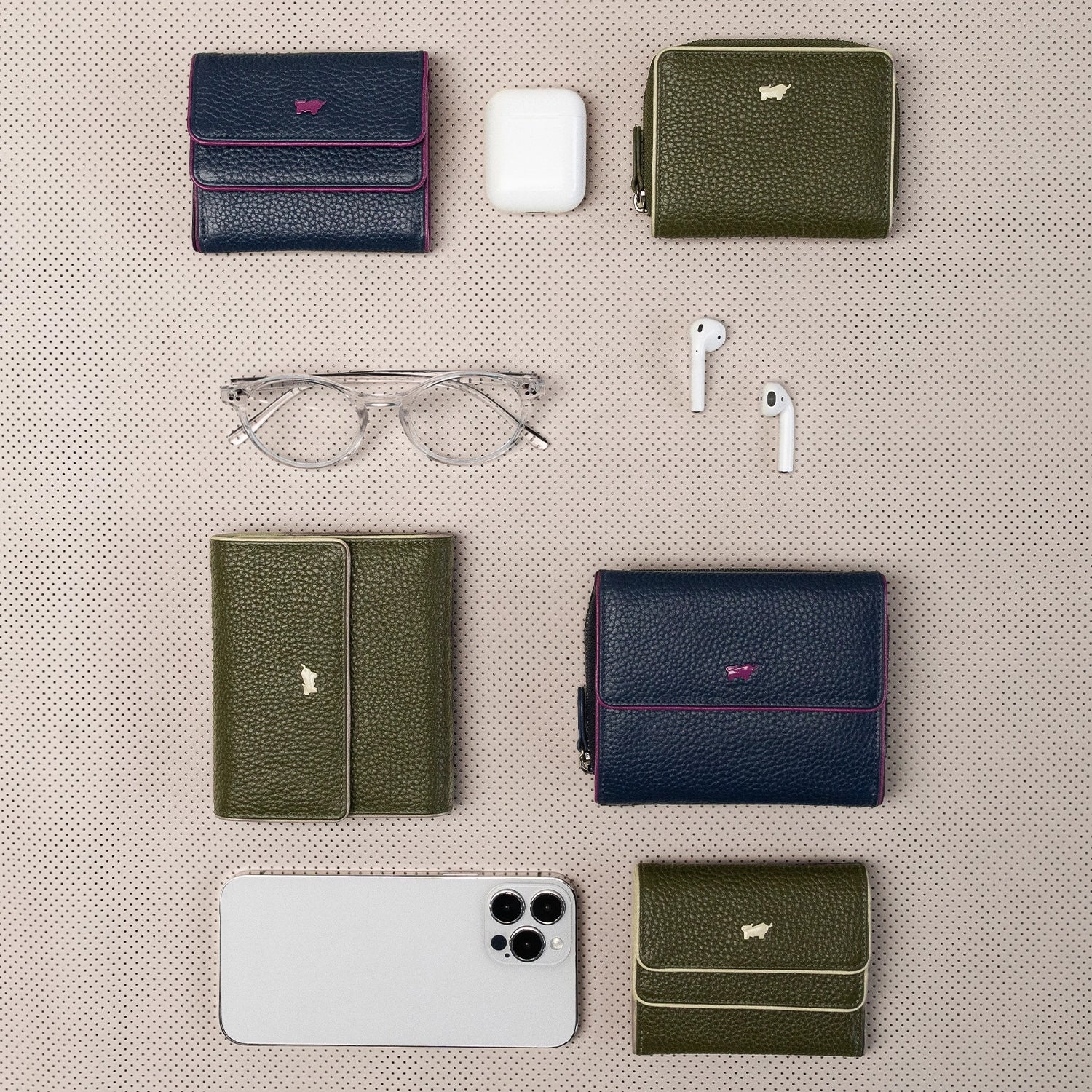
The wallet is our constant companion in everyday life. Cards, cash, receipts, photos of our loved ones – for some, the wallet contains the contents of half a briefcase, while others prefer it minimalistic. Either way: When buying our wallet, we pay attention to personal preferences, look and design, workmanship, and price. But what about sustainability? What makes a wallet sustainable? And what exactly do I need to look for when buying a sustainable wallet?
WHAT MAKES MY WALLET SUSTAINABLE?
When we buy a new wallet, we are not only choosing a product, but also deciding which manufacturing processes we want to support. It is worth taking a closer look and asking yourself: What criteria are actually important to me? What do terms like "vegan leather", "recyclable" and "fair production" mean? Because what sounds like a sustainable wallet at first glance might not be the best solution in reality. Factors such as high-quality workmanship and the resulting longevity of a product can also determine how sustainable the new wallet really is.
WHAT IS MY SUSTAINABLE WALLET MADE FROM?
But let's start at the very beginning - with the production process. The first question that comes to mind is: where do the materials come from? This also means questioning fashionable terms such as "vegan leather": what raw materials are the material made of? Is the production process really environmentally friendly and therefore a real alternative to the natural product of real leather ?
In contrast to some types of artificial leather, real leather is of natural origin and is therefore recyclable and biodegradable. But even real animal leather is of course not immediately harmless. Here, too, we always have to ask ourselves: Where does the leather come from? Is it, for example, a by-product from the food industry, as is the case with Braun Büffel, for example? But there are also crucial differences in the further processing of the leather.

WHAT PROCESSING METHODS ARE USED TO CREATE MY SUSTAINABLE WALLET?
A crucial factor in the production of sustainable wallets is the tanning process used. A large proportion of leather from industrial production is usually tanned with chemicals. Chrome tanning is the most efficient tanning method and, according to European regulations, is not at all harmful to health. Of course, it is important that the partner tanneries comply with these standards and are regularly certified. This is one of the reasons why it is worth investing in higher quality products with a view to the sustainability of our wallet.
A good alternative to conventional tanning processes is vegetable tanning. However, this is a little more complex and therefore more expensive than chemical tanning.
Vegetable tanning processes include treatment with tannins from rhubarb roots, tara pods, quebracho wood, oak or spruce bark, olive leaves or mimosa bark.
HOW DO I RECOGNIZE SUSTAINABLY TANNED LEATHER?
The origin of the finished product plays a central role. Made-in-Germany collections are particularly sustainable, not least because the production routes are short, waste is kept to a minimum and quality standards in Germany are very high.
Institutions such as the Leather Working Group are committed to auditing and certifying companies throughout the leather production process. These certifications make it easier to assess tanneries abroad. Braun Büffel, for example, makes sure to only work with certified partners whose production facilities are regularly audited.
In addition, Braun Büffel is a member of cads , a German cooperation for secured, defined standards for leather goods that are committed to sustainable development in all areas of the supply chain.

WHAT ELSE MAKES MY WALLET SUSTAINABLE?
Even less obvious factors are crucial. For example, the question of how long you will use your wallet is important. Therefore, it is essential that you consider carefully before purchasing what factors your new wallet should fulfill. The better the wallet suits you, your ideas, and your needs, the longer you will surely use it.
Quality, everyday usability, and functionality immediately make a wallet a bit more sustainable, because a long lifespan means we don't constantly buy new products – and that protects the environment AND your bank account in the long run. Wallets are generally used for eight to ten years. With good care, high-quality leather wallets can even become lifelong companions.
EXTENDING THE LIFESPAN OF MY WALLET
Therefore, the decision to purchase a sustainable product does not end with the purchase itself. Leather care and proper cleaning are also important factors. Braun Büffel also offers its customers a lifetime repair service for all products. This way, you can enjoy your leather item for even longer. And should your wallet ever be too worn, then you are on the safe side with a sustainably produced leather wallet, because yes, genuine leather is recyclable!
Made in Germany Collections